
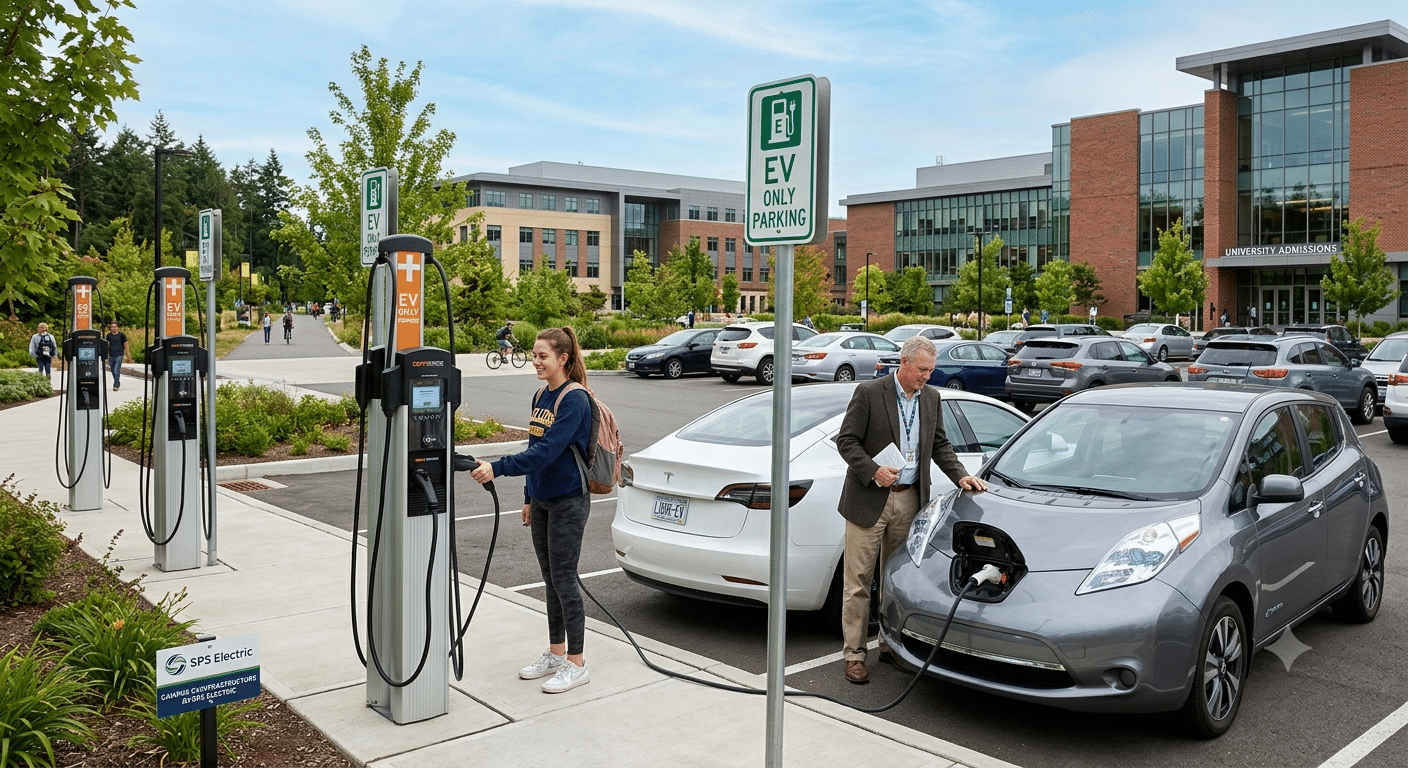
As electric vehicle adoption continues to accelerate, colleges and universities face growing demand for on-campus charging infrastructure. Students, faculty, staff, and visitors increasingly expect reliable charging stations where they park for extended periods.
Installing EV chargers is no longer just an environmental gesture—it is a powerful recruiting tool, a potential revenue stream, and a critical component of institutional sustainability strategies.
Key Benefits of Campus EV Infrastructure
-
Attracting Top Talent & Students: Younger demographics prioritize sustainability. Offering dedicated EV charging demonstrates forward-thinking infrastructure and environmental commitment.
-
LEED & Sustainability Certifications: EV charger installations earn points toward LEED certification and assist universities in meeting campus carbon-neutrality targets.
-
Flexible Revenue & Access Control: Modern networked EV chargers allow institutions to set tiered pricing (such as free or discounted rates for faculty and students, and standard commercial rates for public visitors) managed easily via mobile apps.
Breakdown of EV Charger Types for Campuses
-
Level 1 Charging (120V AC): Takes 8 to 15 hours for a full charge. Has minimal impact on panel capacity and works best for long-term overnight residential parking.
-
Level 2 Charging (208/240V AC): Takes 4 to 8 hours for a full charge. This is the ideal option for daily campus parking lots, faculty garages, and student commuter spaces.
-
Level 3 DC Fast Charging (480V 3-Phase): Takes 20 to 40 minutes for a full charge. Requires substantial 480V 3-phase utility service and is best suited for high-turnover visitor parking or campus fleet vehicle hubs.
Infrastructure Essentials for College Campuses
-
Service Load Analysis: Evaluating existing transformer capacity to ensure the main service entrance can sustain multi-port charger loads without triggering peak-demand penalties.
-
Trenching & Conduit Pathway Design: Planning underground conduits for both current needs and future expansion to avoid costly re-excavation down the road.
-
Smart Load Management: Utilizing load-sharing technology so multiple vehicles can charge on a shared circuit without exceeding peak panel thresholds.
Ready to Electrify Your Campus? SPS Electric handles full-service EV charging installation—from initial site load analysis and panel upgrades to conduit routing and final station commissioning. Contact SPS Electric today to power your campus EV initiative.